

Running a business in Malaysia often means doing ten jobs at the same time.
One moment you are talking to a customer on WhatsApp. Five minutes later, you are checking an invoice. Then someone asks for a quotation, another customer wants an update on their order, and somehow you still need to remember to follow up with a lead from last week.
Sound familiar?
This is where AI automation in Malaysia can make a real difference.
And no, we are not talking about replacing your entire team with robots.
For most Malaysian SMEs, automation is much simpler than that. It means taking repetitive tasks that your staff do every day and allowing software to handle them automatically, while your team focuses on customers, sales and actual business growth.
Here are 10 business processes you can start automating today.
1. Customer Enquiries and WhatsApp Replies

For many Malaysian businesses, WhatsApp is basically the unofficial customer service department.
Customers ask:
“Price how much?”
“Still got stock?”
“Can deliver tomorrow?”
“Where is my order?”
“Open today ah?”
The problem is that answering the same questions repeatedly takes up a surprising amount of time.
An automated system can handle common enquiries, provide product information, collect customer details and direct more complicated questions to your staff.
For example, instead of your team manually answering every enquiry, an automated workflow can:
Customer enquiry → identify the question → provide the relevant information → collect contact details → notify your sales team
Your staff only need to step in when a human conversation is actually needed.
That means faster replies without asking someone to be on WhatsApp 24/7.
2. Lead Follow-Up

One of the biggest problems in sales is not getting leads.
It is forgetting to follow them up.
A customer may enquire about your service today, say “I will think about it”, and then disappear.
Your salesperson gets busy.
Three days pass.
Then three weeks pass.
The opportunity is gone.
With automation, you can create a simple follow-up sequence.
For example:
New lead → instant acknowledgement → quotation → follow-up after 2 days → follow-up after 7 days → sales team notification
The message does not have to sound robotic either. The system can use information from the enquiry to personalise the follow-up.
This is especially useful for businesses receiving leads through websites, Facebook, Instagram, Google Ads and WhatsApp.
Your salespeople can then spend less time remembering who to chase and more time actually closing deals.
3. Quotation Preparation

Preparing quotations sounds easy.
Until you have to prepare 20 of them in a week.
A typical process might involve checking customer information, selecting products or services, calculating prices, adding terms and conditions, preparing a PDF and sending it by email or WhatsApp.
That is a lot of copy-paste.
You can automate much of this process.
A customer submits an enquiry → their information is captured → the relevant products or services are selected → pricing is calculated → a quotation is generated → the customer receives it automatically.
Your team can still review the quotation before sending it when necessary.
The objective is not to remove human approval. It is to remove the boring parts that happen before the approval.
4. Invoice and Payment Reminders
Late payments are painful for any business.
You have already completed the work, but someone still needs to remember to send the invoice, check whether it has been paid and chase the customer when payment is overdue.
Automation can help connect these steps.
For example:
Invoice created → invoice sent → payment due date recorded → reminder sent → overdue notification → internal follow-up
This can be particularly useful for businesses with recurring customers, monthly services or project-based billing.
Instead of checking spreadsheets every Monday morning, your system can tell you which customers actually need attention.
That is a much better use of your Monday morning.
5. Data Entry Between Different Systems

This is one of the most boring jobs in any office.
A customer sends information through WhatsApp.
Someone enters it into Excel.
Then someone copies it into the accounting system.
Then another person updates the CRM.
And suddenly three people have touched the same information.
Automation can connect these systems so information moves automatically.
For example:
Website form → CRM → sales notification → quotation system → accounting system
The more systems you connect, the less manual data entry your employees need to perform.
This also reduces the chance of simple mistakes such as typing the wrong phone number, invoice amount or customer name.
6. Email Management

Does your inbox ever become a second to-do list?
Customer enquiries, supplier messages, invoices, quotations, newsletters, payment notifications and internal emails can quickly pile up.
AI-powered automation can help classify incoming emails and route them to the right place.
For example:
- Customer enquiries can go to sales.
- Invoice emails can go to finance.
- Supplier messages can go to purchasing.
- Important complaints can be flagged immediately.
- Routine emails can receive an automatic acknowledgement.
You do not need to automate every email.
Even removing the repetitive 20–30% can make a noticeable difference.
7. Customer Feedback and Reviews

After completing a purchase or service, many businesses simply hope the customer remembers to leave a review.
Most customers don’t.
Not because they are unhappy.
They are just busy.
You can automate the process.
After a purchase or completed service, the customer receives a message asking for feedback.
Happy customers can be directed to your Google review page.
Customers with complaints can be directed to a private feedback channel so your team can resolve the issue before it becomes a public one.
This turns customer feedback into a repeatable process instead of something your team has to remember manually.
8. Sales Reports and Management Dashboards

Business owners often ask questions such as:
“How many leads did we get this month?”
“Which salesperson converted the most?”
“Which product is selling?”
“How much revenue came from Google Ads?”
Getting the answer should not require someone to spend half a day building an Excel report.
Automation can collect data from your CRM, website, advertising platforms, sales systems and other tools, then update your dashboard automatically.
Instead of waiting until the end of the month to discover what happened, you can have a clearer view of what is happening now.
And yes, this also means fewer Excel sheets named something like:
Final_Report_v7_FINAL_Really_Final.xlsx
We have all seen it.
9. HR and Employee Administration

HR administration contains plenty of repetitive tasks.
Leave applications, onboarding documents, staff reminders, training records, attendance information and internal announcements can often be streamlined.
For example, when a new employee joins:
Employee details submitted → documents collected → onboarding checklist created → relevant information sent to the employee → manager notified
The same idea can be applied to employee training.
A training reminder can be sent automatically, attendance recorded, and completion information stored without HR manually chasing everyone.
For companies with a small HR team, these little improvements can add up quickly.
10. Order Processing and Inventory Updates
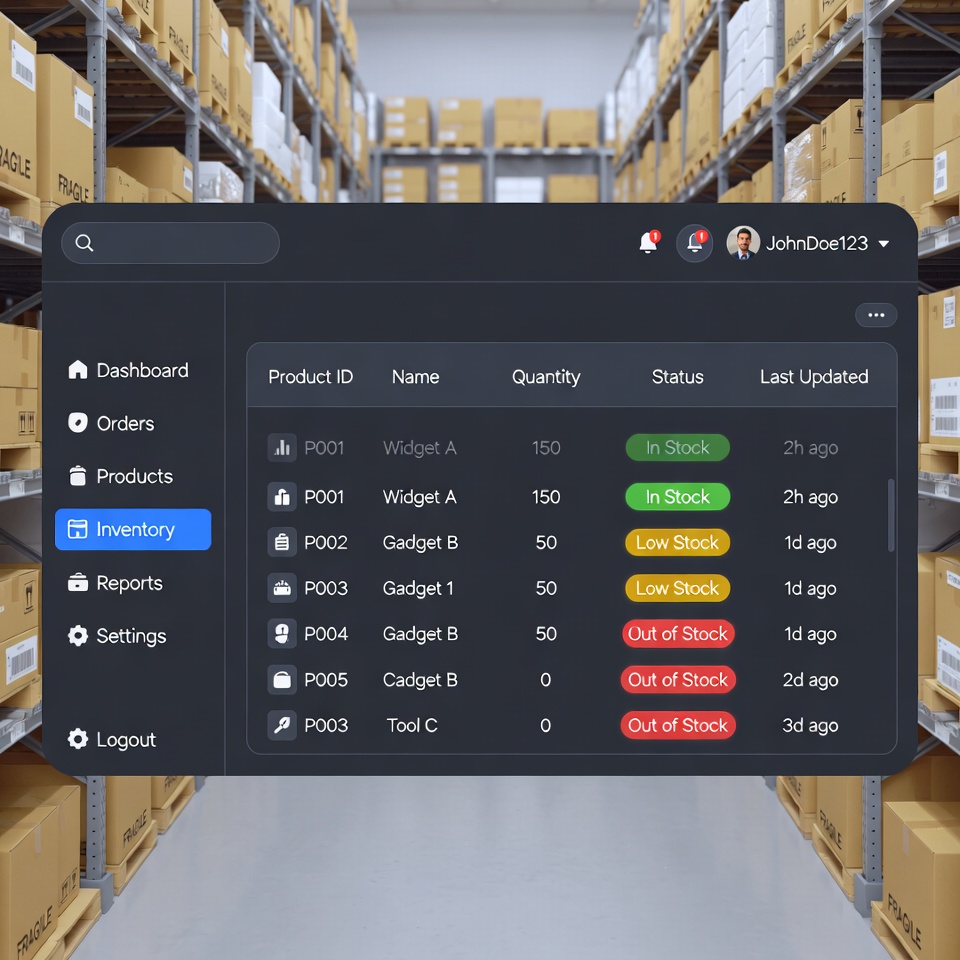
For businesses selling physical products, order processing can become messy very quickly.
Orders may come from your website, Shopee, WhatsApp, Facebook, TikTok or other channels.
Someone then needs to check stock, record the order, prepare the information for fulfilment and update the customer.
Automation can connect these steps.
For example:
New order → check product information → update inventory → notify fulfilment → send customer confirmation → update sales record
This can be especially useful for Malaysian businesses selling through multiple channels.
The goal is not necessarily to create a completely hands-off operation.
It is to make sure information moves from one step to another without someone constantly copying and pasting it.
So, What Should Your Business Automate First?

This is where many businesses make a mistake.
They hear about AI automation and immediately start looking for an AI chatbot, AI agent or the latest tool everyone is talking about.
But the better question is:
“Which part of my business is wasting the most time?”
A good automation opportunity usually has three characteristics:
It happens frequently.
If your staff perform a task once a month, automating it may not be worth the effort.
It is repetitive.
If someone follows the same steps every time, there is a good chance the workflow can be improved.
It has a measurable business impact.
Saving 10 minutes sounds small.
Saving 10 minutes, 20 times a day, five days a week is a different story.
AI Automation Does Not Mean Automating Everything

There is no need to automate your entire company from day one.
Trying to automate everything at once can actually make things more complicated.
For most Malaysian SMEs, a better approach is to start with one process that takes up a lot of time and happens repeatedly.
Find the repetitive task that causes the most frustration.
Measure how much time your team spends on it.
Automate the workflow.
See what happens.
Then improve and expand from there.
The best automation is usually not the one with the fanciest technology.
Start Small and Scale Your Automation
There is no need to automate your entire company from day one. Trying to automate everything at once can actually make things more complicated.
For most Malaysian SMEs, a better approach is to start with one process that takes up a lot of time and happens repeatedly.
Find the task that causes the most frustration. Measure how much time your team spends on it, automate the workflow, and see what changes.
Once you have a process that works, you can gradually expand automation to other parts of the business.
Ready to Find Out What You Can Automate?

It is very likely that your business already has several automation opportunities hiding in plain sight.
Think about the Excel sheet someone updates every morning, the WhatsApp enquiries your staff answer repeatedly, or the quotations your sales team prepares manually.
Then there are the invoices your accounts team checks one by one and the leads that never receive a follow-up because everyone is simply too busy.
These repetitive tasks are exactly where automation can make a real difference.
How We Can Help You?
At Origin Alpha Solutions, we help Malaysian businesses identify repetitive processes and build practical automation workflows around the tools they already use.
We look at your current workflow first — then work out what should be automated, what should stay human, and where automation can actually save time or reduce cost.
No need to automate for the sake of saying your company is “AI-powered”.
Start with the process. Then choose the technology.
Want to know which parts of your business can be automated?
Talk to us and let’s identify your best automation opportunities.