

For many Malaysian SMEs, WhatsApp is more than just a messaging app. It is where customers ask about prices, check product availability, make appointments, request quotations and, occasionally, send a simple “Hi” and disappear for three days.
The problem is that as your business grows, managing all those WhatsApp messages manually becomes increasingly difficult.
A customer expects a quick reply. Your sales team is busy. Someone is having lunch. Someone else is driving. And suddenly, a message asking for a quotation has been sitting unanswered for two hours.
This is where AI chatbots and WhatsApp automation can make a real difference.
Instead of replacing your customer service team, an AI chatbot can handle repetitive questions, collect customer information and route conversations to the right person — allowing your team to focus on customers who actually need human assistance.
Why WhatsApp Customer Service Is Important for Malaysian SMEs

WhatsApp is deeply integrated into everyday business communication in Malaysia.
Customers often prefer sending a WhatsApp message instead of filling out a contact form, calling a company or sending an email. This is especially common for businesses such as:
- Retail shops
- Clinics and healthcare businesses
- Tuition centres
- Property agencies
- Automotive businesses
- Service providers
- Restaurants and food businesses
- B2B suppliers
For these businesses, WhatsApp can become a major customer service channel.
The challenge is volume.
When you have 10 conversations a day, replying manually is easy.
When you have 100 or 300 conversations, things start getting messy.
Messages can be missed. Replies can be delayed. Different staff members may give different answers. And customers may simply move on to a competitor.
What Can an AI Chatbot Do on WhatsApp?
A properly designed WhatsApp AI chatbot can handle many of the repetitive tasks that normally consume your team’s time.
For example, imagine a customer sends:
“Hi, how much is your package?”
Instead of waiting for a salesperson to notice the message, the chatbot can immediately respond with the relevant information.
It can also handle questions such as:
- What are your prices?
- What are your business hours?
- Where are you located?
- Do you provide delivery?
- What services do you offer?
- How long does the process take?
- Can I make an appointment?
- Can I speak to a salesperson?
This means customers can get an answer even when your team is unavailable.
And yes, that includes after office hours. Your staff deserve to sleep.
AI Chatbot vs Traditional Auto-Reply
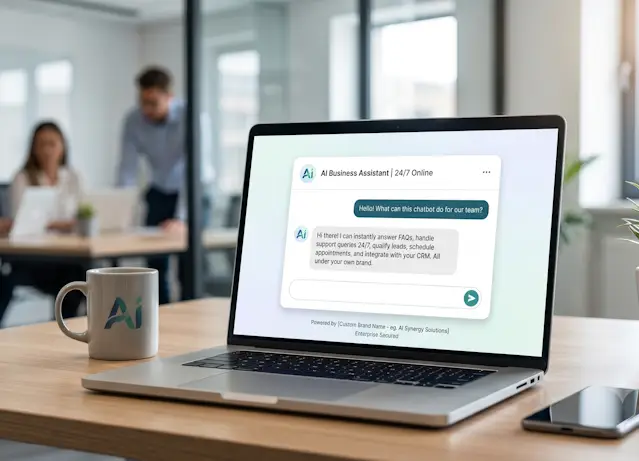
There is an important difference between a basic WhatsApp auto-reply and a modern AI chatbot.
A traditional auto-reply usually follows fixed rules.
For example:
“Thank you for contacting us. Please select 1 for Sales, 2 for Support, or 3 for Billing.”
That can work, but customers don’t always follow the script.
An AI chatbot can understand variations in how people ask questions.
For example:
“How much is it?”
“What’s the price?”
“Can you give me your package rate?”
“I want to know your pricing.”
All four messages can mean essentially the same thing.
Instead of forcing the customer through a rigid menu, AI can understand the intent behind the message and provide a more natural response.
Automating More Than Just Replies
One of the biggest advantages of WhatsApp automation for SMEs is that it does not have to stop at answering questions.
A chatbot can also collect information from potential customers.
For example:
- Customer asks about a service.
- AI explains the relevant package.
- AI asks for the customer’s name.
- AI collects their phone number or email.
- AI asks what service they are interested in.
- The conversation is assigned to the appropriate salesperson.
- The salesperson receives the conversation with the relevant information already collected.
Your staff no longer need to start every conversation with:
“Hi, may I know your name?”
Again.
And again.
And again.
Automatically Route Customers to the Right Team
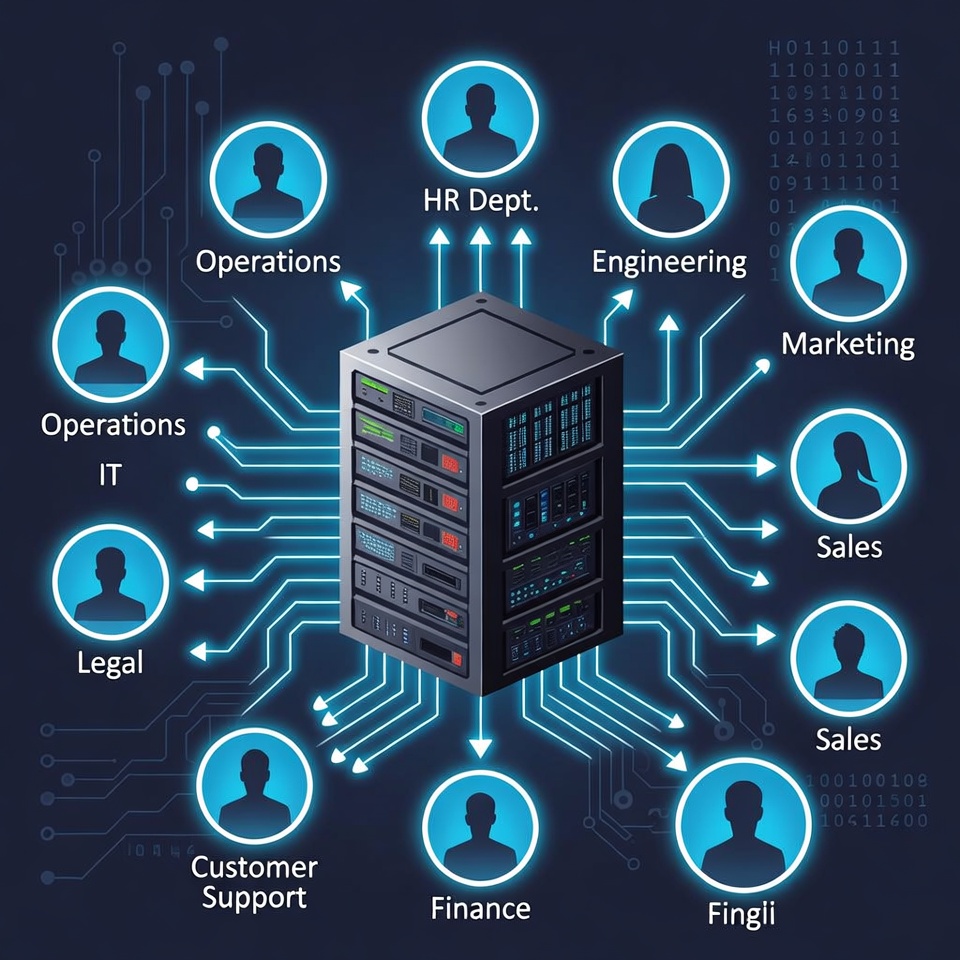
As a business grows, not every WhatsApp conversation should go to the same person.
A well-designed customer service automation system can identify the type of enquiry and route it accordingly.
For example:
Sales enquiry → Sales team
Technical issue → Support team
Payment question → Finance team
Appointment request → Admin team
This can significantly reduce the time your staff spend sorting through conversations.
It also helps avoid the classic SME problem:
“I thought you were replying to him.”
Nobody knows who was supposed to reply.
The customer knows only one thing: nobody replied.
AI Can Help Qualify Leads
AI chatbots can also be useful for lead generation and lead qualification.
For example, a property agency could ask:
- Which area are you interested in?
- What is your budget?
- Are you looking for a new project or subsale property?
- When are you planning to buy?
A car dealer could ask:
- Which model are you interested in?
- New or used?
- What is your estimated budget?
- Are you looking for financing?
By the time a salesperson receives the conversation, they already have useful information about the prospect.
This makes the sales process more efficient and helps your team prioritise higher-value leads.
Connecting WhatsApp With Your Business Systems

This is where WhatsApp automation becomes much more powerful.
Instead of treating WhatsApp as a standalone messaging app, businesses can connect it with other systems such as:
- CRM systems
- Customer databases
- Appointment systems
- E-commerce platforms
- Marketing automation tools
- Internal notification systems
For example, when a customer submits an enquiry through WhatsApp, the system could automatically create a new lead in the CRM.
When an appointment is booked, an automatic confirmation can be sent.
When a customer requests a quotation, the relevant salesperson can be notified.
The goal is not simply to make WhatsApp “smarter”.
The goal is to reduce the amount of manual work happening behind the scenes.
Should Malaysian SMEs Use AI for Everything?

Definitely not.
This is where many businesses get automation wrong.
AI is excellent for repetitive, predictable and information-based conversations.
But some situations still need a human.
For example:
- Complaints
- Complex technical problems
- Negotiation
- Sensitive customer issues
- High-value sales
- Situations where the customer specifically requests a human
A good system should therefore allow seamless human handover.
The AI handles the first part of the conversation, collects the relevant information and passes the conversation to a human when necessary.
Think of AI as your receptionist — not the CEO.
How Much Can AI Chatbots Save an SME?

The answer depends on the number and type of enquiries your business receives.
Let’s say your team receives 100 WhatsApp enquiries per day and 60% of them are repetitive questions.
If an AI chatbot can handle a significant portion of those enquiries automatically, your staff can spend more time on sales, customer problems and other tasks that require human judgement.
The real value isn’t simply reducing headcount.
It is increasing the productivity of the people you already have.
For a small business with limited manpower, that can be extremely valuable.
What Malaysian SMEs Should Consider Before Automating WhatsApp

Before implementing an AI chatbot for WhatsApp, businesses should look at a few important areas.
1. Your Most Common Questions
Start with the questions your team answers repeatedly.
These are usually the easiest conversations to automate.
2. Your Customer Journey
Don’t automate random parts of the process.
Look at what happens from the first WhatsApp message until the customer becomes a lead, books an appointment or makes a purchase.
3. Human Handover
Always have a clear way to transfer conversations to your staff.
4. Business Rules
The chatbot should know what it is allowed to say, what information it should collect and when it should stop and involve a human.
5. Integration
Consider whether the chatbot should connect with your CRM, booking system, customer database or other business tools.
The best automation is usually not the one with the most features.
It is the one that removes the most unnecessary manual work.
Is AI Chatbot Automation Suitable for Your SME?

For many Malaysian SMEs, the question is no longer whether customers will use WhatsApp.
They already do.
The more important question is whether your business is going to continue managing those conversations manually as the number of customers grows.
A well-designed WhatsApp AI chatbot can help businesses respond faster, qualify leads, automate repetitive customer service tasks and reduce the workload on internal teams.
But technology alone is not enough.
The chatbot needs to be properly designed around your actual business processes, customer questions and sales workflow.
That is where professional AI consulting and digital transformation can make a big difference.
At ORIGIN ALPHA SOLUTIONS, we help Malaysian businesses identify which parts of their customer service and sales processes can be automated using AI, WhatsApp automation and digital tools.
Rather than simply adding a chatbot and hoping for the best, we look at the bigger picture — what your customers ask, how your team works and where automation can actually save time and improve response speed.
You can also use our AI Automation Savings Calculator to estimate how much time and money your business could potentially save by automating repetitive WhatsApp customer service tasks.
Want to Automate Your WhatsApp Customer Service?
If your team is spending too much time answering the same WhatsApp questions every day, there may be a better way.
Contact ORIGIN ALPHA SOLUTIONS to discuss how AI chatbots, WhatsApp automation and business process automation could be applied to your SME.
Sometimes the smartest way to grow your team is not to hire another person.
It is to stop making your existing people answer the same question 200 times.